Understanding Pathology Report Samples (PDF)
Pathology report samples, often in PDF format, are crucial for understanding diagnoses. These documents detail a pathologist’s examination of tissues or blood, aiding healthcare professionals.
What is a Pathology Report?
A pathology report is a detailed document created by a pathologist following the examination of a tissue, blood, or other bodily fluid sample. It’s essentially a microscopic diagnosis, providing crucial information for patient care. These reports aren’t simply statements of disease presence; they are comprehensive analyses that guide treatment decisions.
The report’s core function is to provide a definitive diagnosis, often based on microscopic examination of tissues obtained through biopsies or surgical removal. It details the characteristics of any abnormal cells, indicating whether they are cancerous, pre-cancerous, or benign. Sample reports, frequently available as PDFs, contain a wealth of information beyond just the diagnosis.
They include descriptions of the sample itself, microscopic findings, and any additional tests performed, like special stains or molecular analyses. Understanding these reports is vital for both healthcare providers and, increasingly, informed patients. The accuracy of the diagnosis hinges on the pathologist’s expertise and the thoroughness of the examination documented within the report.
The Role of a Pathologist
Pathologists are medical doctors specializing in the diagnosis of disease by examining body tissues, fluids, and organs. They are the crucial link between clinical data and a definitive diagnosis, often working behind the scenes to guide patient treatment. Their expertise is paramount in interpreting sample analyses, ultimately impacting healthcare outcomes.
When a pathology report, often delivered as a PDF, is generated, it represents the pathologist’s meticulous evaluation. They don’t just identify diseases; they characterize them, providing details about their aggressiveness and potential response to therapy. This detailed assessment informs oncologists, surgeons, and other specialists.
The pathologist’s role extends beyond diagnosis to include quality control in the laboratory and contributing to research. They utilize advanced techniques, including immunohistochemistry and molecular testing, to refine diagnoses and personalize treatment plans. Analyzing a sample and creating a comprehensive report is their primary function, ensuring accurate and timely information for patient care.

Key Components of a Pathology Report
Pathology reports, frequently in PDF form, contain patient details, specimen information, gross and microscopic descriptions, a diagnosis, and testing results.
Patient Information & Specimen Details
Pathology report PDF documents begin with essential identifying information. This section meticulously details the patient’s name, date of birth, medical record number, and potentially, gender. Accurate patient identification is paramount to avoid errors.
Following patient details, the report specifies the specimen examined. This includes the type of tissue or fluid analyzed – for example, a biopsy from the breast, colon, or skin. The date and time of specimen collection are also recorded, alongside the location on the body from which it was obtained.

Crucially, the report will outline how the specimen was received and preserved, noting any fixatives used (like formalin). Unique specimen identifiers, assigned by the lab, are included for tracking purposes. This detailed documentation ensures a clear audit trail and accurate correlation with clinical history.
Gross Description
The Gross Description section within a pathology report PDF provides a visual summary of the specimen as observed by the pathologist before microscopic examination. This is a crucial initial assessment. It details the specimen’s size, shape, color, and texture. For example, a biopsy might be described as a “1.5 x 1.0 x 0.5 cm firm, tan-colored tissue fragment.”
The pathologist notes any notable features, such as the presence of lesions, masses, or areas of discoloration. If the specimen consists of multiple fragments, each is typically described individually. The report will also indicate how the specimen was processed for microscopic analysis – for instance, whether it was entirely submitted or if representative sections were chosen.
This macroscopic evaluation provides vital context for the subsequent microscopic findings, offering clues about the nature of the tissue and potential abnormalities. It’s a foundational element of the diagnostic process.
Microscopic Description

The Microscopic Description section of a pathology report PDF details the pathologist’s observations of the tissue when viewed under a microscope. This is where the cellular architecture and any abnormalities are meticulously documented. The report will describe the types of cells present, their arrangement, and any unusual features like changes in size, shape, or staining characteristics.
Pathologists use specific terminology to describe these findings, noting details such as the presence of inflammation, necrosis (cell death), or atypical cells. They may quantify these observations, for example, “moderate lymphocytic infiltrate” or “numerous mitotic figures.” The description will also address the relationship of any abnormalities to the surrounding tissue structures.
This detailed analysis forms the basis for the final diagnosis, providing a comprehensive assessment of the tissue’s microscopic features; It’s a critical component of the pathology report.
Diagnosis
The Diagnosis section within a pathology report PDF represents the pathologist’s definitive interpretation of the examined tissue sample. It’s a concise statement summarizing the findings from the gross and microscopic examinations, and any ancillary tests performed. This is the core conclusion of the report, providing the most important information for clinical decision-making.
The diagnosis may include a specific disease entity, such as a type of cancer, inflammation, or infection. It often incorporates descriptive terms to further characterize the findings, like grade, stage, or subtype. The pathologist may also provide differential diagnoses – a list of possible conditions considered, along with reasons for favoring the final diagnosis.
A clear and accurate diagnosis is essential for guiding patient treatment and prognosis. It’s the culmination of the pathologist’s expertise and the foundation for effective healthcare.
Additional Testing & Results
The Additional Testing & Results section of a pathology report PDF details investigations beyond standard microscopic examination. These tests refine the diagnosis and provide crucial prognostic information. Common examples include special tissue stains, which highlight specific cellular components, aiding in identification of microorganisms or abnormal proteins.
Pathology diagnoses frequently require extra testing, such as these special stains. The results from this additional testing are meticulously documented here, often with interpretations explaining their significance; Molecular testing, analyzing DNA or RNA, is increasingly common, identifying genetic mutations driving disease progression.
This section may also include results from flow cytometry, used to characterize cell populations, or cytogenetic analysis, examining chromosome abnormalities. The comprehensive presentation of these results empowers clinicians to tailor treatment strategies effectively.
Special Stains & Immunohistochemistry
Special Stains & Immunohistochemistry represent vital components within a pathology report PDF, offering detailed cellular and tissue characterization. Special stains utilize dyes to highlight specific structures – like collagen or amyloid – aiding in diagnosis. Immunohistochemistry (IHC) employs antibodies to detect specific proteins within cells, crucial for identifying cell types and disease markers.
The report will list each stain performed and its corresponding results. Positive staining indicates the presence of the target substance, while negative staining suggests its absence. These findings help differentiate between similar-looking tissues and pinpoint the origin of a tumor.
IHC is particularly valuable in cancer diagnosis, identifying biomarkers that guide targeted therapies. The pathology report will interpret the staining patterns, providing context for clinical decision-making. Understanding these techniques is key to interpreting the overall diagnostic assessment.
Molecular Testing
Molecular Testing, increasingly prevalent in pathology report PDFs, analyzes DNA, RNA, or proteins at a molecular level to refine diagnoses and predict treatment responses. These tests go beyond traditional microscopy, identifying genetic mutations, gene expression patterns, and chromosomal abnormalities.
Common molecular tests include polymerase chain reaction (PCR) for detecting infectious agents or specific gene mutations, fluorescence in situ hybridization (FISH) for identifying chromosomal changes, and next-generation sequencing (NGS) for comprehensive genomic profiling. The report details the specific test performed, the methodology, and the results obtained.
Interpreting molecular data requires specialized expertise. The pathology report will often include an interpretation section explaining the clinical significance of the findings, guiding personalized treatment strategies. These tests are vital for precision medicine, tailoring therapies to an individual’s unique molecular profile.
Pathologic Staging (If Applicable)
Pathologic Staging, a critical component within a pathology report PDF, particularly for cancer diagnoses, classifies the extent of disease based on tumor size, lymph node involvement, and distant metastasis. This information is crucial for determining prognosis and guiding treatment decisions.
The staging system most commonly used is the TNM system – Tumor, Nodes, Metastasis – providing a standardized framework for describing cancer spread. The report will clearly state the stage assigned (e.g., Stage I, II, III, IV) and detail the specific criteria used for that determination.
Factors considered include tumor grade, invasion depth, and the number of positive lymph nodes. Accurate staging is essential for effective cancer management, enabling clinicians to select the most appropriate therapies and monitor treatment response. The pathology report’s staging information directly impacts patient care.
Comment Section & Interpretation
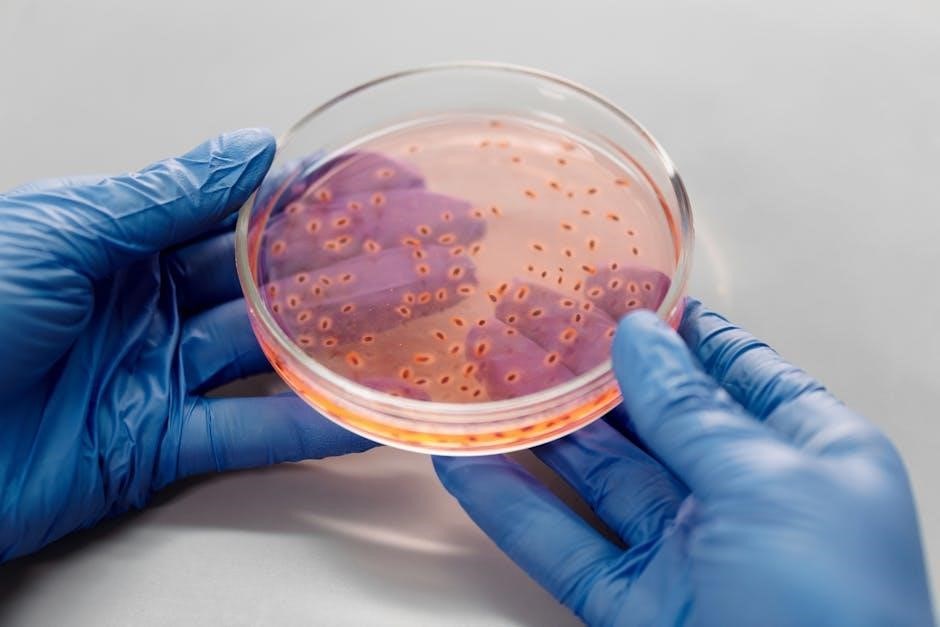
The Comment Section of a pathology report PDF provides the pathologist’s overall interpretation of the findings. This is where they synthesize the microscopic and macroscopic observations, offering a concise summary of the diagnosis and its implications.
This section often includes differential diagnoses – other possibilities considered and ruled out – and clarifies any unusual or complex features of the case; The pathologist may also offer recommendations for further testing or clinical correlation.
Understanding this section requires medical expertise, but it’s vital for healthcare providers to grasp the pathologist’s conclusions. The interpretation bridges the gap between laboratory findings and patient care, guiding treatment strategies and informing prognosis. A well-written comment section enhances the report’s clinical utility, ensuring accurate and informed decision-making.
Types of Pathology Reports & Samples
Pathology reports vary by specialty; samples include breast, gastrointestinal, dermatopathology, liver biopsy, bone marrow, and gyn biopsies, often available as PDFs.
Breast Pathology Report Sample
Breast pathology reports, frequently accessed as PDF documents, provide detailed analyses of breast tissue samples, typically obtained through biopsies or surgical excisions. These reports are essential for diagnosing benign conditions, such as fibroadenomas, or malignant neoplasms, like various types of breast cancer.
A typical report includes patient information, specimen details (site, type), gross description (size, appearance), and a comprehensive microscopic description outlining cellular features. The diagnosis section clearly states the findings – for example, “invasive ductal carcinoma, grade 2.”
Crucially, these reports detail hormone receptor status (ER, PR) and HER2 status, guiding treatment decisions. Additional testing, like immunohistochemistry, is often included. Pathologic staging, if cancer is present, determines the extent of the disease. The comment section offers interpretation and correlation with imaging findings, assisting clinicians in patient management.
Understanding these sample reports requires familiarity with medical terminology, and collaboration with a healthcare provider is vital for accurate interpretation.
Gastrointestinal Pathology Report Sample
Gastrointestinal (GI) pathology reports, commonly available as PDF files, analyze tissue samples from the esophagus, stomach, small intestine, colon, and rectum. These reports are vital for diagnosing conditions ranging from benign inflammation (gastritis, colitis) to malignant tumors (adenocarcinoma, lymphoma).
A standard report includes patient details, specimen origin (e.g., colon biopsy), gross description (size, color), and a detailed microscopic description of cellular changes. The diagnosis section specifies the findings – for instance, “moderately differentiated adenocarcinoma of the colon.”
Additional testing, such as immunohistochemistry, may be performed to determine tumor characteristics and guide treatment. Reports often include information on tumor grade, stage, and lymph node involvement. The comment section provides a pathologist’s interpretation, correlating findings with clinical and endoscopic data.
Reviewing these sample reports necessitates understanding medical terminology; consulting with a healthcare professional ensures accurate comprehension and informed decision-making.
Dermatopathology Report Sample
Dermatopathology reports, frequently distributed as PDF documents, focus on skin biopsies. These reports are essential for diagnosing a wide array of skin conditions, including inflammatory diseases (eczema, psoriasis), infections (fungal, bacterial), and skin cancers (melanoma, basal cell carcinoma).
A typical report begins with patient information and details about the biopsy site and type. The gross description notes the sample’s appearance, while the microscopic description details cellular structures and any abnormalities observed.
The diagnosis section provides a specific identification of the skin condition. Special stains and immunohistochemistry may be used to confirm diagnoses, particularly in cases of melanoma or atypical lesions.
These sample reports often include a comment section offering the pathologist’s interpretation and correlation with clinical findings. Understanding the terminology requires medical expertise; therefore, discussing the report with your doctor is crucial for proper understanding.
Liver Biopsy Pathology Report Sample
Liver biopsy pathology reports, commonly found as PDF files, are vital for evaluating liver health and disease. These reports detail a pathologist’s analysis of a small liver tissue sample, obtained through a biopsy procedure. They aid in diagnosing conditions like hepatitis, cirrhosis, fatty liver disease, and liver cancer.
A standard report includes patient details, specimen origin, and a gross description of the tissue. The microscopic description meticulously outlines the liver cells’ structure, identifying inflammation, fibrosis, or abnormal cell growth.
The diagnosis section provides a definitive identification of the liver condition. Special stains might be employed to detect specific proteins or substances, aiding in accurate diagnosis.
The report’s comment section offers the pathologist’s interpretation, correlating findings with clinical data. These sample reports require medical expertise to interpret; therefore, a discussion with your healthcare provider is essential for understanding the results.
Bone Marrow Pathology Report Sample

Bone marrow pathology reports, frequently delivered as PDF documents, are essential for diagnosing blood cancers like leukemia and lymphoma, as well as other hematological disorders. These reports detail a pathologist’s examination of a bone marrow sample, typically obtained through aspiration and biopsy.
The report begins with patient information and details about the specimen. A gross description outlines the sample’s appearance, followed by a detailed microscopic description of the cellular composition of the marrow. This includes assessing the number and types of blood cells, and identifying any abnormal cells.
The diagnosis section provides a specific identification of any detected abnormalities. Special stains and immunohistochemistry may be used to characterize the cells further.
The report’s comment section offers the pathologist’s interpretation, correlating findings with clinical data. Understanding these sample reports requires medical expertise; discuss the results with your healthcare provider.
Gyn Biopsy Report Sample
Gyn biopsy pathology reports, commonly provided as PDF files, are critical in evaluating gynecological health concerns. These reports detail a pathologist’s analysis of tissue samples obtained from the cervix, uterus, or other reproductive organs, often during procedures like colposcopy or endometrial biopsy.
The report structure typically begins with patient identifiers and specimen details. A gross description notes the sample’s physical characteristics, followed by a comprehensive microscopic description of the cellular architecture. Pathologists assess for abnormalities, such as precancerous or cancerous cells.
The diagnosis section clearly states the findings, identifying any detected conditions. Special stains or immunohistochemistry might be employed for further characterization.
The concluding comment section provides the pathologist’s interpretation, integrating the findings with clinical context. Reviewing these sample reports necessitates medical knowledge; always consult your doctor for clarification.
Accessing & Interpreting PDF Reports
PDF pathology reports are typically downloaded from patient portals. Understanding medical terminology and collaborating with your healthcare provider are key to proper interpretation.
Downloading & Viewing PDF Reports
Accessing your pathology report in PDF format is increasingly common through secure patient portals offered by hospitals and clinics. These portals require registration and login credentials to protect your private health information. Once logged in, navigate to the “Reports” or “Documents” section, where you should find a list of available reports, including pathology results.
Clicking on the report will typically initiate a download or open the PDF directly within your browser. Ensure you have a PDF reader installed, such as Adobe Acrobat Reader, which is freely available online. If the report doesn’t download automatically, check your browser’s download settings. Some portals may also offer options to email the report to yourself or print a copy.
Remember to download reports to a secure location on your computer or device. If you encounter difficulties downloading or viewing the report, contact your healthcare provider’s office for assistance. They can provide guidance or resend the report if needed.
Understanding Medical Terminology
Pathology reports are filled with specialized medical terminology that can be challenging to decipher. Terms like “neoplasia,” “hyperplasia,” and “atypia” describe cellular changes, while “immunohistochemistry” refers to a technique using antibodies to identify specific proteins in tissue samples. Understanding these terms is crucial for grasping the report’s findings.
Don’t hesitate to ask your healthcare provider to explain any unfamiliar terms. Online medical dictionaries and resources, such as those provided by the National Cancer Institute, can also be helpful. Breaking down complex words into their root components – prefixes, suffixes, and stems – can often reveal their meaning.

Familiarizing yourself with common pathology terms empowers you to participate more actively in discussions about your health and treatment options. Remember, clear communication with your doctor is key to understanding your pathology report and making informed decisions.
Working with Your Healthcare Provider
Pathology reports are best reviewed with your healthcare provider. They possess the expertise to translate the complex findings into understandable terms and explain their implications for your health. Don’t be afraid to ask questions – no question is too small or insignificant.

Bring a list of questions to your appointment, focusing on the diagnosis, staging (if applicable), and recommended next steps. Discuss any concerns you have about the report’s findings and potential treatment options. Your provider can clarify the report’s details and address your anxieties.
A collaborative approach, where you actively participate in understanding your report, leads to better informed decisions and improved health outcomes. Remember, your healthcare provider is your partner in navigating your health journey.

Resources for Further Information
Understanding pathology reports can be challenging. Several resources offer valuable information to patients and their families. The American Cancer Society (www.cancer.org) provides comprehensive guides on cancer diagnoses and pathology reports.
The National Cancer Institute (www.cancer.gov) offers detailed explanations of medical terminology and cancer types. Additionally, organizations like the College of American Pathologists (www.cap.org) provide patient-focused resources.
NovoPath 360 (www.novopath.com) showcases examples of customized pathology report formats, offering insight into report structures. Online medical dictionaries and glossaries can help decipher unfamiliar terms. Remember to always discuss information found online with your healthcare provider for personalized guidance.
The Future of Pathology Reporting
Digital pathology and AI are transforming reporting, enabling faster and more accurate diagnoses. NovoPath 360 facilitates customizable pathology report formats for improved efficiency.
Digital Pathology & AI
Digital pathology is revolutionizing how pathology reports are created and interpreted, moving beyond traditional microscopy. Whole slide images (WSIs) allow pathologists to view samples remotely and collaborate more effectively. Artificial intelligence (AI) algorithms are increasingly integrated into digital pathology workflows, assisting with tasks like image analysis, object detection, and even preliminary diagnosis.
AI can help identify subtle patterns in tissue samples that might be missed by the human eye, potentially leading to earlier and more accurate diagnoses. Machine learning models are being trained on vast datasets of pathology report samples (often in PDF format) to improve their performance. This technology promises to reduce turnaround times, enhance diagnostic accuracy, and ultimately improve patient outcomes. The future envisions AI-powered tools seamlessly integrated with pathology report generation, offering a new level of precision and efficiency.
Furthermore, AI can assist in standardizing report content and ensuring completeness, reducing variability between pathologists.
Customizable Report Formats (NovoPath 360)
NovoPath 360 represents a significant advancement in pathology report generation, offering unparalleled customization capabilities. Unlike standardized formats, NovoPath 360 allows laboratories to tailor reports to their specific needs and preferences, ensuring all critical information is presented clearly and efficiently. This flexibility is particularly valuable when dealing with complex cases requiring detailed analysis, often reflected in extensive pathology report sample PDFs.
Labs can design report templates that incorporate specific data fields, formatting options, and even branding elements. This level of control ensures consistency across all reports while accommodating the unique requirements of different subspecialties. The ability to customize reports also facilitates integration with other laboratory information systems (LIS) and electronic health records (EHRs).
Ultimately, NovoPath 360 empowers pathologists to create reports that are not only comprehensive but also user-friendly, improving communication and collaboration with clinicians. Accessing pathology report examples within the platform aids in template design.