Converting from a manual to an automatic transmission is a complex undertaking, potentially costing between $1,000 and $20,000, depending on vehicle specifics and labor.
This modification dramatically alters the driving experience, shifting driver responsibility and impacting vehicle value, requiring careful consideration before proceeding.
Overview of the Conversion Process
The conversion fundamentally involves removing the existing manual transmission, clutch, and related components. Subsequently, an automatic transmission assembly, including the torque converter, shifter mechanism, and necessary cabling, is installed.
Significant drivetrain modifications, potentially including driveshaft adjustments, are often required. Crucially, electronic integration, encompassing ECU remapping and wiring adaptations, is essential for seamless operation and optimal performance.
Why Convert? Benefits and Drawbacks
Converting offers increased driving ease, particularly in congested traffic, and broader accessibility for drivers unfamiliar with manual transmissions. However, it often diminishes driver engagement and can potentially reduce fuel efficiency.
Significant costs and potential impacts on vehicle resale value are key drawbacks, alongside the complexity of the conversion process itself, demanding careful evaluation.
Assessing Your Vehicle’s Compatibility
Compatibility hinges on vehicle make, model, and engine type; some conversions are simpler than others, requiring fewer modifications to drivetrain components.
Thorough research is crucial before beginning, ensuring parts availability and a feasible installation process for your specific car.
Vehicle Make and Model Considerations
Certain vehicles present easier conversion paths due to factory-offered automatic transmission options, simplifying parts sourcing and electrical integration.
Acura, for example, offers limited manual options, while others may have extensive aftermarket support. Older models often lack readily available conversion kits, increasing complexity and cost.
Thoroughly investigate your vehicle’s specific model year and trim level to determine feasibility and potential challenges before committing to the project.
Engine Compatibility and Required Modifications
Engine compatibility is paramount; most engines can accommodate either transmission type, but modifications are often necessary.
ECU remapping is crucial to synchronize the engine and new automatic transmission, potentially costing $8,000 to $20,000.
Flexplates replace flywheels, and wiring harnesses must be adapted, ensuring seamless communication between the engine and the automatic transmission control system.
Cost Breakdown: A Detailed Estimate
Conversion costs range widely, from $1,000 for junkyard parts and self-installation to $4,000+ for professional services, impacting overall project expenses.
Transmission Unit Cost (New vs. Used)
New automatic transmissions can range from $2,000 to $8,000+, depending on the vehicle and transmission type, offering reliability but at a premium price point.
Used transmissions, sourced from junkyards or rebuilders, can significantly reduce costs—potentially under $1,000—but carry inherent risks regarding condition and longevity, requiring careful inspection.
Rebuilt units offer a middle ground, balancing cost and reliability.
Component Costs: Beyond the Transmission
Beyond the transmission itself, anticipate costs for a torque converter ($300-$800), shifter assembly and cables ($200-$600), and potential driveshaft modifications ($200-$500).
Additional expenses include fluids, filters, mounting hardware, and potentially a new flexplate. These components collectively can add $700 to $1900 to the overall conversion budget, significantly impacting the final price.
Labor Costs: Professional Installation
Professional installation typically ranges from $1,500 to $5,000, depending on the vehicle’s complexity and shop rates. Expect 20-40 hours of labor for a complete conversion, encompassing removal, installation, and fluid checks.
More intricate work, like custom wiring or driveshaft adjustments, will increase these costs. Choosing an experienced mechanic is crucial for a successful and reliable outcome.
ECU Remapping/Wiring/Electronics Costs
ECU remapping and wiring can range from $800 to $2,000, essential for synchronizing the engine and new automatic transmission. Custom wiring harnesses are often needed, adding to the expense.
Diagnostic tools and specialized knowledge are required, making professional assistance vital. Failure to properly integrate the electronics can lead to performance issues or complete failure.
Essential Components for the Conversion
Key components include the automatic transmission, a compatible torque converter, a new shifter assembly with cables, and potentially a modified driveshaft for proper fitment.
The Automatic Transmission Itself
Selecting the right automatic transmission is paramount; consider new versus used options, impacting cost and reliability. A used transmission can save money, potentially ranging from $500 to $2,000, but carries inherent risks.
New units offer peace of mind, costing between $2,000 and $8,000 or more, depending on the vehicle and transmission type. Compatibility is crucial, ensuring proper gear ratios and fitment.
Torque Converter Selection
The torque converter is a vital component, multiplying engine torque for smoother acceleration. Stall speed is a key consideration, matching engine characteristics and intended use. Higher stall speeds suit performance applications, while lower speeds prioritize fuel efficiency.
Costs range from $300 to $800, depending on quality and specifications. Proper selection ensures optimal performance and prevents drivetrain stress.
Shifter Assembly and Cables
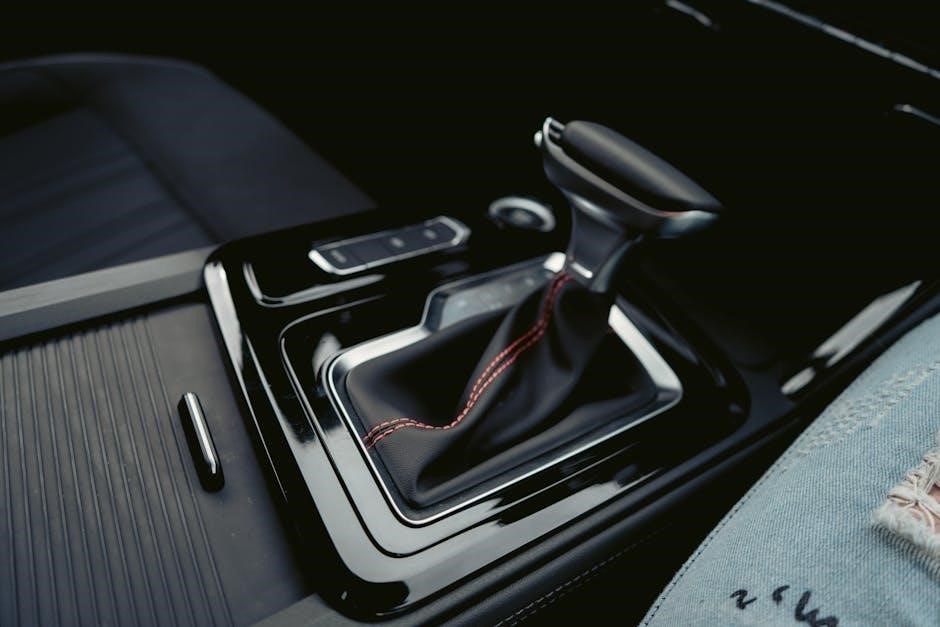
Selecting the correct shifter assembly and cables is crucial for precise gear selection. Options include column shifters, floor consoles, and aftermarket kits, ranging from $150 to $500.
Ensure compatibility with the chosen transmission and vehicle interior. Proper cable routing prevents binding and ensures smooth, reliable shifting performance, enhancing the driving experience.
Driveshaft Modifications
Driveshaft length adjustments are often necessary due to the differing lengths of manual and automatic transmissions. Expect costs between $200 and $800 for shortening or lengthening, and rebalancing.
Proper alignment and U-joint angles are vital to prevent vibrations and drivetrain damage, ensuring smooth power transfer and long-term reliability of the converted system.
Installation Steps: A General Guide
Begin by removing the manual transmission, then install the automatic, connecting the shifter and cables carefully. Finalize with drivetrain alignment and fluid filling.
Removing the Manual Transmission
Initially, disconnect the driveshaft, shifter linkages, and all electrical connections from the existing manual transmission. Support the engine from above to prevent dropping during removal.
Carefully unbolt the transmission from the engine, utilizing a transmission jack for controlled lowering. Drain all fluids beforehand to minimize mess and ensure a cleaner workspace for the upcoming installation.
Installing the Automatic Transmission
Carefully raise the automatic transmission with a transmission jack, aligning it with the engine mounting points. Securely bolt the transmission into place, ensuring proper torque specifications are followed.
Reconnect the driveshaft, being mindful of proper alignment, and install the torque converter. Finally, reattach all electrical connections, verifying each one for a secure and reliable connection.
Connecting the Shifter and Cables
Install the automatic transmission shifter assembly within the cabin, ensuring it’s securely mounted. Connect the shift cables, carefully routing them to avoid any obstructions or binding.
Adjust the cable tension for precise gear selection, verifying smooth and accurate shifts. Finally, test the shifter’s functionality through all gear positions, confirming proper operation before proceeding.
Potential Challenges and Troubleshooting
Electrical integration issues and drivetrain mismatches are common hurdles during conversion. Finding compatible parts can also prove difficult, requiring extensive research and sourcing.
Electrical System Integration Issues
Integrating the automatic transmission’s electrical components presents significant challenges. The engine control unit (ECU) often requires remapping, costing between $8,000 and $20,000, to properly communicate with the new transmission. Wiring harnesses may need modification or complete replacement to accommodate the automatic’s sensors and solenoids.
Incorrect wiring can lead to transmission malfunctions, warning lights, or even complete system failure, necessitating careful diagnosis and correction by a qualified technician.
Drivetrain Mismatch Problems
Mismatched drivetrain components can severely impact performance and reliability. The torque converter must be correctly matched to the engine’s output characteristics for optimal efficiency. Incorrect gearing can result in sluggish acceleration or poor fuel economy.
Furthermore, the driveshaft may require modification to accommodate the automatic transmission’s length, preventing vibrations and ensuring smooth power delivery.
Finding Compatible Parts
Sourcing compatible parts presents a significant challenge; junkyards offer cost savings, but condition is uncertain. Full conversion kits simplify the process, ensuring compatibility, though at a higher price point. Careful research is crucial, verifying interchangeability across makes and models.
Online forums and specialized retailers are valuable resources for locating necessary components.
Legal and Insurance Implications
Vehicle registration may require updates post-conversion, and informing your insurance provider is essential. Modifications can affect coverage and premiums, so transparency is key.
Vehicle Registration Updates
Following a manual-to-automatic conversion, verifying local regulations regarding vehicle modifications is crucial. Some jurisdictions necessitate a vehicle inspection to confirm the alteration complies with safety standards.
Updating your vehicle registration to reflect the changed drivetrain is often legally required, potentially involving submitting documentation and paying associated fees. Failure to do so could lead to penalties.
Insurance Coverage Considerations
Immediately inform your insurance provider about the transmission conversion; failing to do so could invalidate your policy. Insurance premiums may shift, potentially increasing or decreasing, based on the perceived risk associated with the automatic transmission.
Some insurers might require a vehicle appraisal post-conversion to accurately assess its value and adjust coverage accordingly, ensuring adequate protection.

Finding a Qualified Mechanic
Locate a mechanic with proven expertise in drivetrain swaps, specifically manual-to-automatic conversions; this ensures a smooth, reliable installation process.
Verify their experience and ask about similar projects completed successfully, confirming their capability for this complex task.
Importance of Expertise
A successful manual-to-automatic transmission conversion demands a mechanic possessing specialized knowledge of drivetrain dynamics, electrical systems, and ECU remapping procedures.
Incorrect installation can lead to severe drivetrain mismatch issues, compromising vehicle safety and reliability; therefore, selecting a technician with a proven track record is paramount for a flawless outcome.
Their experience minimizes risks and ensures proper synchronization between the engine and the new automatic transmission.
Questions to Ask Potential Installers
When vetting installers, inquire about their specific experience with manual-to-automatic conversions on vehicles similar to yours, and request references from previous clients.
Clarify their approach to ECU remapping and electrical system integration, ensuring they possess the necessary diagnostic tools and expertise to handle potential compatibility issues.
Discuss warranty coverage for both parts and labor, and obtain a detailed, itemized cost estimate upfront.
DIY vs. Professional Installation
DIY installation demands significant mechanical skill and specialized tools, while professional installation, though costly, ensures accuracy and minimizes risks during this complex conversion.
Skill Level Required
Successfully undertaking a manual to automatic transmission conversion necessitates an expert-level understanding of automotive mechanics, particularly drivetrain systems and electrical wiring.
Proficiency in removing and installing transmissions, modifying drivelines, and accurately diagnosing electrical issues is crucial. Without this expertise, the project risks costly errors and potential vehicle damage, making professional assistance highly recommended.
Tools and Equipment Needed
A comprehensive toolkit is essential for a manual to automatic conversion, including a full socket set, wrenches, torque wrench, and specialized transmission jacks.
Diagnostic scanners, wiring tools, and potentially a welding machine are also vital. Access to a lift simplifies the process, but is not always necessary. Expect significant investment in specialized equipment for a successful DIY installation.
Long-Term Maintenance and Reliability
Regular automatic transmission fluid changes are crucial for longevity. Expect potential wear and tear on the new components, requiring diligent monitoring and proactive maintenance schedules.
Automatic Transmission Fluid Changes
Maintaining the correct fluid level and condition is paramount for a converted automatic transmission’s health. Regular fluid checks, typically every 30,000 to 60,000 miles, are essential.
Complete fluid changes, including filter replacement, should occur every 60,000 to 100,000 miles, depending on driving conditions and the manufacturer’s recommendations. Using the correct fluid type is critical to avoid damage.
Potential Wear and Tear
Converted automatic transmissions may experience accelerated wear on components like the torque converter, valve body, and planetary gearsets. Regular inspections are crucial to identify leaks or unusual noises.
Increased stress from the conversion can lead to premature failure, especially if the initial installation wasn’t precise or if the vehicle is subjected to demanding driving conditions.
Cost Saving Opportunities
Sourcing used parts and performing some of the installation work yourself can significantly reduce the overall conversion cost, though expertise is vital.
Careful planning and research can unlock substantial savings during this complex automotive modification process.
Sourcing Used Parts
Utilizing junkyards and online marketplaces offers substantial cost reductions when acquiring components for a manual-to-automatic conversion. However, thorough inspection is crucial to ensure functionality and avoid future complications.
Used transmissions, torque converters, and shifter assemblies can be significantly cheaper, but verifying their condition and compatibility is paramount for a successful and reliable conversion.
Performing Some Work Yourself
Undertaking portions of the conversion, like removing the old manual transmission or installing basic components, can significantly lower labor costs. However, this demands substantial mechanical skill and appropriate tools.
Tasks requiring specialized knowledge, such as ECU remapping or intricate wiring, are best left to professionals to prevent damage and ensure a safe, functional outcome.
Alternatives to Full Conversion
Consider an automatic transmission overhaul or exploring different automatic transmission options as potentially more cost-effective alternatives to a complete manual-to-automatic swap.
These options may address performance or convenience needs without the extensive modifications required for a full conversion.
Automatic Transmission Overhaul
Before committing to a full conversion, thoroughly evaluate the existing automatic transmission. A comprehensive overhaul, including replacing worn components and updating fluids, can restore functionality and potentially address performance issues.
This approach is often significantly cheaper than a complete swap, avoiding the complexities of drivetrain modifications and electronic integration, offering a viable solution for extending the life of the current transmission.
Exploring Different Automatic Transmission Options
Beyond a direct replacement, investigate various automatic transmission types. Consider modern options like continuously variable transmissions (CVTs) or dual-clutch transmissions (DCTs) for improved efficiency and performance.
Compatibility is key; ensure the chosen transmission aligns with your engine’s power output and the vehicle’s overall design, potentially requiring adapter plates or custom modifications.
Current Market Trends and Pricing (December 12, 2025)
As of today, conversion costs range widely, averaging $3,000-$8,000 for common vehicles, but parts scarcity impacts pricing significantly, increasing expenses for rarer models.
Average Conversion Costs by Vehicle Type
Compact cars typically see conversion costs between $2,500 and $4,500, while mid-size sedans range from $3,000 to $6,000. Trucks and SUVs, due to their complexity, often exceed $5,000, potentially reaching $8,000 or more.
Luxury vehicles and sports cars generally command the highest prices, sometimes surpassing $10,000, influenced by specialized parts and labor demands.
Impact of Parts Availability on Pricing
Parts scarcity significantly drives up conversion costs; older or less common vehicles face higher expenses due to limited availability of compatible automatic transmissions and related components.
Demand for specific parts, especially those from discontinued models, can inflate prices dramatically, potentially adding several thousand dollars to the overall project budget.
Resources and Further Information
Online forums and dedicated communities offer invaluable support, while parts suppliers and retailers provide necessary components for a successful conversion.
These resources facilitate knowledge sharing and sourcing, aiding in a smoother, more informed manual-to-automatic transition.
Online Forums and Communities
Dedicated online forums are crucial resources, offering a platform for enthusiasts to share experiences, troubleshooting tips, and detailed guides regarding manual to automatic conversions.
These communities provide access to a wealth of knowledge, including part sourcing advice, potential pitfalls to avoid, and insights from individuals who have completed similar projects, fostering collaborative problem-solving.
Active participation can significantly streamline the process and prevent costly mistakes.
Parts Suppliers and Retailers
Sourcing components for a manual to automatic conversion requires careful selection of reputable suppliers and retailers specializing in drivetrain parts.
Options range from dedicated transmission specialists to large automotive retailers, offering both new and used parts, impacting overall project cost and reliability.
Thorough research and comparison shopping are essential to secure quality components at competitive prices.