Festool Guide Rail Dimensions: A Comprehensive Overview (Updated 04/23/2026)
For six decades‚ Festool has refined guide rails‚ ensuring effortless‚ precise cuts—horizontally‚ vertically‚ or crosscutting. These rails deliver perfect guidance for all projects.
Festool guide rails represent a cornerstone of precision woodworking‚ evolving over sixty years to become an indispensable tool for professionals and enthusiasts alike. These aren’t simply lengths of metal; they are meticulously engineered systems designed to deliver consistently straight‚ accurate cuts with minimal effort.
The core principle behind Festool guide rails lies in their ability to provide unwavering guidance for a variety of power tools‚ including circular saws‚ routers‚ and jigsaws. This guidance eliminates the guesswork and potential for errors inherent in freehand cutting. Whether tackling large-format sheet goods or intricate joinery‚ Festool guide rails empower users to achieve professional-quality results.
Their versatility extends to various cutting applications – horizontal‚ vertical‚ and crosscutting – making them adaptable to a wide range of project requirements.
The Importance of Precise Dimensions
In woodworking‚ precision is paramount‚ and accurate dimensions are the foundation of any successful project. Festool guide rails directly address this need‚ offering a level of cutting accuracy that’s difficult to achieve with traditional methods. Even slight deviations can compromise the fit and structural integrity of your work.
The rigidity and straightness of a Festool guide rail‚ coupled with its secure locking mechanism‚ minimize deflection and ensure the cutting tool follows a perfectly linear path. This is especially critical when working with expensive materials or when tight tolerances are required.
Precise dimensions translate to seamless joints‚ professional-looking finishes‚ and ultimately‚ a higher quality finished product. Investing in a precise system like Festool’s is an investment in the success of your woodworking endeavors.
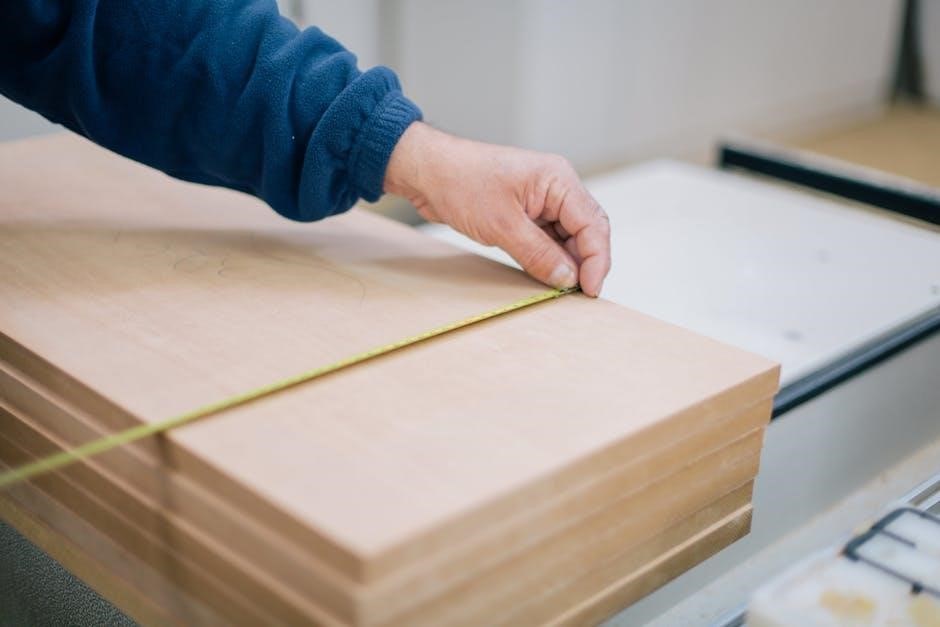
Standard Festool Guide Rail Sizes
Festool offers guide rails in various lengths—FS 1400/2‚ FS 1900/2‚ and FS 2800/2—to accommodate diverse project needs and workspace configurations.
FS 1400/2 Guide Rail ― Detailed Dimensions
The FS 1400/2 guide rail is a popular choice for a wide range of cutting applications‚ offering a balance between portability and cutting length. Its overall length measures 1400mm (approximately 55.1 inches)‚ providing ample space for many common project sizes. The rail’s width is a standard 63mm (2.5 inches)‚ ensuring compatibility with most Festool tools and accessories within the guide rail system.
This rail features a non-slip coating on the underside‚ enhancing stability and preventing unwanted movement during operation. The integrated guide strip allows for smooth and accurate gliding of Festool saws and routers. Furthermore‚ the FS 1400/2 is designed for easy connection to other guide rails‚ enabling extended cutting lengths when necessary. Its robust construction guarantees durability and long-lasting performance‚ making it a reliable addition to any workshop.
FS 1900/2 Guide Rail ― Detailed Dimensions
The FS 1900/2 guide rail extends cutting capacity for larger projects‚ maintaining Festool’s precision and ease of use. Measuring 1900mm (approximately 74.8 inches) in length‚ this rail is ideal for sheet goods and longer workpieces. Like the FS 1400/2‚ it maintains a consistent width of 63mm (2.5 inches)‚ ensuring seamless integration with existing Festool guide rail components.
The non-slip underside provides a secure grip on various surfaces‚ minimizing movement during cuts. Its robust aluminum construction offers exceptional rigidity and durability. The FS 1900/2 easily connects to other rails using the Festool joining connectors‚ allowing for customized lengths. This rail is a valuable asset for professionals and serious hobbyists requiring extended reach and consistent accuracy in their cutting tasks.
FS 2800/2 Guide Rail ‒ Detailed Dimensions
The FS 2800/2 guide rail is Festool’s longest standard rail‚ designed for exceptionally large-format materials and demanding cutting applications. Extending to 2800mm (approximately 110.2 inches) in length‚ it minimizes the need for repositioning during long cuts‚ maximizing efficiency and maintaining a straight line. Maintaining the standard 63mm (2.5 inches) width‚ it’s fully compatible with all Festool guide rail accessories and joining connectors.
Constructed from high-grade aluminum‚ the FS 2800/2 offers superior stability and resistance to bending. The integrated non-slip strip ensures secure placement on diverse surfaces. Professionals working with large panels‚ furniture components‚ or architectural elements will find this rail indispensable for achieving precise‚ splinter-free results. It represents Festool’s commitment to providing solutions for any scale of project.

Guide Rail Length and Application
Selecting the appropriate guide rail length is crucial for project success‚ impacting efficiency and cut quality. Consider workpiece size and cutting direction carefully.
Choosing the Right Length for Your Projects
Determining the ideal Festool guide rail length hinges on the scope of your projects and the tools you’ll be utilizing. For smaller‚ portable tasks‚ a shorter rail like the FS 1400/2 might suffice‚ offering maneuverability and ease of handling. However‚ larger panels or extensive cuts demand a longer rail – the FS 1900/2 or even the FS 2800/2 – to ensure consistent support and accuracy throughout the entire cut.
Consider the material’s dimensions; the rail must extend beyond the workpiece’s width for safe and precise operation. Furthermore‚ anticipate future projects. Investing in a longer rail initially can save you the expense and inconvenience of purchasing additional rails later. Remember‚ multiple rails can be joined‚ providing flexibility‚ but seamless integration is key for maintaining accuracy.
Horizontal Cutting Applications & Rail Length
For horizontal cutting on workpieces or directly on the floor‚ guide rail length is paramount for stability and a clean cut. When cutting sheet goods‚ the rail should extend beyond the material’s edges on both sides‚ preventing tear-out and ensuring a straight line. A 1900/2 rail is often suitable for standard sheet sizes‚ while larger panels necessitate the 2800/2.
Consider the tool’s baseplate; it must fully engage with the rail for accurate tracking. When cutting long boards‚ strategically position the rail to minimize unsupported sections. Joining multiple rails provides extended reach‚ but ensure the connectors are secure. Prioritize a rail length that offers ample support and control throughout the entire cutting process.
Vertical Cutting Applications & Rail Length
When performing vertical cuts‚ such as wall paneling or cabinet installations‚ guide rail length dictates the achievable cut height and stability. For standard wall heights‚ a 1400/2 or 1900/2 rail is frequently sufficient‚ but taller walls demand the 2800/2 or a connected rail setup.
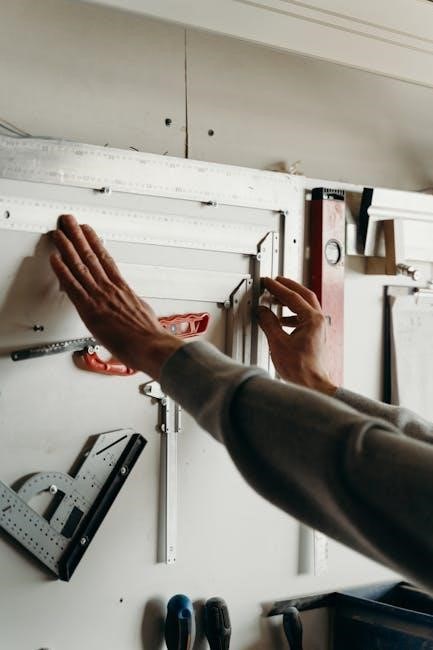
Securely attaching the rail to the wall is crucial; use appropriate clamps or the Festool wall application accessories (FS-WA). Ensure the rail is perfectly vertical using a level before cutting. Longer rails require more robust anchoring to prevent deflection during operation. Consider the tool’s weight and cutting depth when determining the necessary rail length and support. Prioritize safety and accuracy with a stable‚ well-supported setup.

Guide Rail Width and Compatibility
Festool guide rails maintain a consistent width‚ ensuring compatibility across various tools and accessories. Connectors and width are vital for seamless system integration.
Standard Guide Rail Width Specifications
Festool guide rails are meticulously engineered with a standardized width‚ a crucial factor for consistent performance and broad compatibility within the Festool system. The standard width‚ typically around 30mm (approximately 1.18 inches)‚ is maintained across the FS 1400/2‚ FS 1900/2‚ and FS 2800/2 models.
This consistent dimension allows for seamless integration with a wide array of Festool tools‚ including circular saws‚ routers‚ and jigsaws. The precise width ensures that the guide rail profile engages correctly with the tool’s guide bushing‚ delivering accurate and straight cuts; Variations in width are minimal‚ adhering to strict quality control standards. This dedication to precision is a hallmark of the Festool brand‚ providing users with reliable and repeatable results in every application.
Compatibility with Different Festool Tools
Festool’s guide rail system is renowned for its exceptional compatibility across a diverse range of their power tools. The standardized guide rail width and profile design ensure seamless integration with circular saws like the TS 55 R‚ routers such as the OF 1000‚ and even jigsaws.
This versatility eliminates the need for multiple guide rail systems‚ streamlining your workflow and reducing costs. Festool achieves this compatibility through a precisely engineered guide bushing system on each tool‚ designed to interact perfectly with the rail’s profile. Adapters are available for certain tools‚ further expanding the system’s reach. This broad compatibility is a key benefit‚ allowing users to leverage a single guide rail setup for numerous cutting and routing applications.
Guide Rail Connectors and Width Considerations
Festool guide rail connectors are crucial for creating longer‚ stable cutting setups. These connectors securely join individual rail sections‚ maintaining a perfectly straight cutting path; The standard guide rail width—typically around 300mm (approximately 11.8 inches)—is designed for optimal stability and ease of handling.
When using connectors‚ it’s vital to ensure a flush connection between rails to prevent any inconsistencies in the cut. The width of the connected rails doesn’t alter the tool’s ability to track accurately‚ but longer assemblies require careful support to avoid sagging. Festool offers various connector types‚ including angled connectors for non-90-degree cuts‚ enhancing the system’s adaptability.
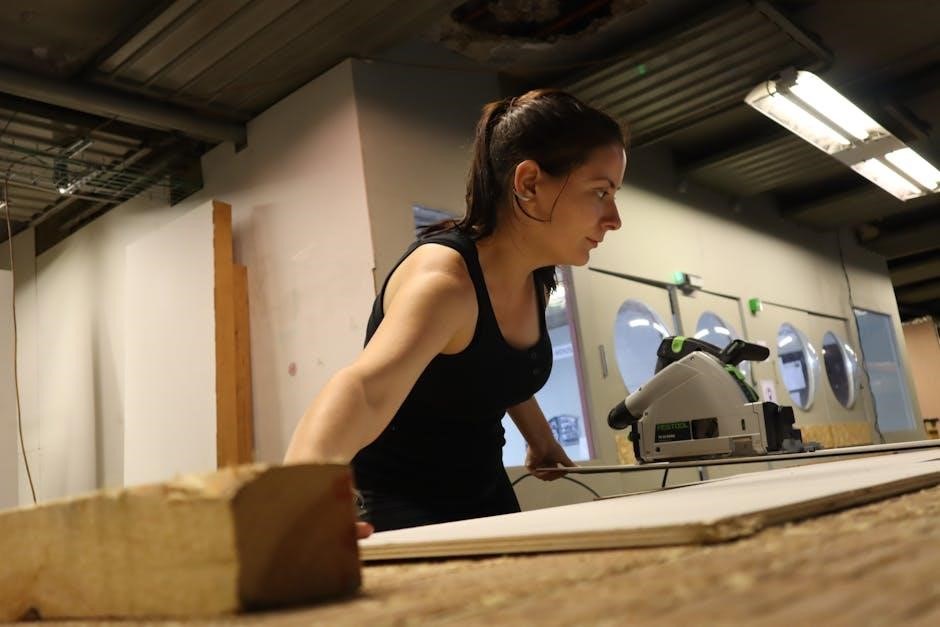
Guide Rail System Components & Dimensions
Festool’s guide rail system includes connectors‚ angle guides‚ and non-slip mats. These components enhance precision‚ stability‚ and safety during various cutting applications.
Guide Rail Joining Connectors ― Dimensions & Use
Festool guide rail joining connectors are crucial for extending the reach of standard rails‚ enabling cuts across larger workpieces. These connectors‚ typically constructed from high-impact polymer‚ ensure a seamless and stable connection between rails. While specific dimensions vary slightly depending on the rail model (FS 1400/2‚ FS 1900/2‚ FS 2800/2)‚ they generally maintain a low profile to avoid interference with the saw base.
The connectors feature a robust locking mechanism that prevents shifting during operation‚ guaranteeing accuracy. Installation is straightforward‚ requiring no tools – simply align the rails and snap the connector into place. Proper alignment is key; ensure the rails are perfectly flush before securing the connector. Using multiple connectors allows for building exceptionally long guide rail setups‚ accommodating large panels or extended cuts. Regular inspection of the connectors is recommended to ensure continued secure operation.
Angle Guide Dimensions and Functionality
Festool angle guides significantly expand the versatility of the guide rail system‚ enabling precise angled cuts with ease. These guides attach directly to the Festool guide rail‚ providing a stable reference point for saws and routers. The dimensions of the angle guide itself are relatively compact‚ typically around 6 inches in length and 3 inches in width‚ ensuring minimal obstruction.
Functionality centers around a precise locking mechanism allowing for adjustments from 0 to 45 degrees‚ and sometimes beyond‚ depending on the model. A clear scale indicates the set angle‚ promoting accuracy. The base of the angle guide is designed to firmly grip the guide rail‚ preventing movement during operation. Using the angle guide allows for creating miters‚ bevels‚ and other angled cuts with the same precision as straight cuts‚ enhancing project possibilities.
Non-Slip Mats ‒ Dimensions and Grip Enhancement
Festool non-slip mats are crucial accessories for maintaining guide rail stability during operation‚ preventing unwanted movement and ensuring accurate cuts. These mats are typically rectangular‚ measuring approximately 14 inches in length and 3.5 inches in width‚ designed to fit snugly beneath the guide rail. They are constructed from a high-friction rubber material‚ providing exceptional grip on various surfaces.
The primary function of these mats is to minimize slippage‚ particularly on smooth or polished floors. They create a secure bond between the rail and the workpiece‚ even during aggressive cutting. The textured surface enhances friction‚ resisting movement caused by saw vibrations. Using these mats significantly improves cut quality and safety‚ reducing the risk of kickback or inaccurate results. They are a small investment for substantial gains in precision.
Specialized Guide Rail Options
Festool offers specialized rails like the FS-WA for wall applications‚ micro-adjustment tools for fine-tuning‚ and splinter guards for clean edges.
FS-WA Guide Rail ― Wall Application Dimensions
The FS-WA Guide Rail is specifically engineered for vertical cutting applications on walls‚ providing exceptional stability and precision. Its dimensions are optimized for common wall thicknesses and material types‚ ensuring secure attachment and accurate results. Typically‚ the FS-WA is available in lengths mirroring the standard guide rails – 1400mm (55;1 inches) and 2800mm (110.2 inches).
However‚ its defining feature is the integrated wall mounting system. This allows for quick and easy attachment to surfaces without the need for clamps‚ a crucial benefit when working vertically. The rail’s width remains consistent with other Festool guide rails‚ ensuring compatibility with existing accessories. The FS-WA’s profile is also designed to minimize gaps and prevent splintering during vertical cuts‚ delivering professional-quality finishes on drywall‚ paneling‚ and other wall materials.
Micro-Adjustments and Fine-Tuning Dimensions
Festool guide rails excel in precision‚ offering micro-adjustment capabilities for incredibly accurate cuts. These adjustments typically range from 0 to +/- 3mm (approximately 0.12 inches)‚ allowing for minute shifts in cutting position. The micro-adjustment mechanism is integrated directly into the guide rail‚ ensuring smooth and consistent movement.
The fine-tuning scale is clearly marked‚ enabling users to precisely dial in the desired offset. This is particularly useful for repetitive cuts‚ groove adjustments‚ or achieving perfect fits. The adjustment knob itself is ergonomically designed for comfortable and controlled operation. Furthermore‚ the system’s locking mechanism securely holds the adjusted position‚ preventing unwanted movement during operation. These features collectively contribute to the exceptional accuracy and versatility of the Festool guide rail system.
Splinter Guards ‒ Dimensions and Protection
Festool splinter guards are crucial for achieving clean‚ professional-looking cuts‚ preventing tear-out and damage to workpieces. These guards typically measure approximately 400mm (15.75 inches) in length and 25mm (approximately 1 inch) in height‚ providing substantial protection along the cut line.
They attach securely to the guide rail via a friction fit‚ ensuring they remain in place during operation. The guard’s material is a durable‚ yet slightly flexible plastic‚ conforming to the wood’s surface. This minimizes gaps and maximizes splinter prevention. Replacement guards are readily available and inexpensive. Proper use significantly enhances the finish quality‚ especially when working with veneered or delicate materials‚ safeguarding both the workpiece and the tool.

Understanding Guide Rail Profiles
The guide rail profile is essential for smooth tool gliding and precise cuts. Compatibility between rails and tools is key‚ and profiles are replaceable for maintenance.
The Role of the Guide Rail Profile
The Festool guide rail profile is a crucial component‚ acting as the interface between the rail and your power tools. Its primary function is to ensure a friction-reducing‚ consistently smooth gliding action‚ which directly translates to accuracy and clean cuts. This specialized profile isn’t merely a strip; it’s engineered to minimize resistance‚ allowing the tool to track perfectly along the rail’s length.
Beyond smooth movement‚ the profile provides stability‚ preventing unwanted deviations during operation. A well-maintained profile contributes significantly to the overall precision achievable with the Festool guide rail system. Regular inspection and replacement of the profile are recommended‚ especially with frequent use‚ to maintain optimal performance and prevent potential damage to both the rail and your tools. It’s a small part with a significant impact on cut quality.
Compatibility of Different Profiles
While Festool guide rails share a standardized system‚ profile compatibility isn’t universally interchangeable across all tools and rail generations. Older Festool tools may require specific profiles‚ while newer models benefit from updated designs offering enhanced glide and durability. It’s essential to verify compatibility before assuming a profile will work seamlessly.
Generally‚ profiles are designed to work within a specific range of Festool tools‚ but always consult the Festool documentation or website for definitive guidance. Using an incompatible profile can lead to inaccurate cuts‚ increased friction‚ or even damage to the rail or tool. Festool frequently updates its systems‚ so staying informed about the latest profile recommendations is crucial for maintaining optimal performance and precision.
Replacing and Maintaining Guide Rail Profiles

Guide rail profiles‚ though durable‚ are subject to wear and tear over time‚ impacting cutting accuracy. Replacing a worn profile restores the rail’s precision and smooth gliding action. Festool offers replacement profiles readily available through their website and authorized dealers. The replacement process is straightforward‚ typically involving a simple removal and insertion of the new profile.
Regular maintenance extends profile lifespan. Cleaning the profile with a soft cloth and removing debris prevents buildup that can cause friction. Avoid harsh chemicals or abrasive cleaners. Inspect the profile periodically for damage‚ such as cracks or deformation. Prompt replacement of damaged profiles ensures continued accuracy and prevents potential damage to the guide rail itself.

Guide Rail Storage and Transport Dimensions
Festool guide rails are designed for efficient storage within Systainers‚ offering protection during transport and maximizing workspace organization.
Systainer Compatibility and Dimensions
Festool’s guide rail system seamlessly integrates with their Systainer organization system‚ providing a robust and portable storage solution. This compatibility isn’t merely about fitting the rails into a case; it’s about creating a complete‚ interconnected workflow.
Systainers‚ available in various sizes‚ are specifically designed to accommodate different guide rail lengths and accompanying accessories. For example‚ the FS 1400/2 rail‚ along with its angle guide and non-slip mats‚ can comfortably reside within a Systainer³.
Typical Systainer dimensions relevant to guide rail storage are approximately 396 x 296 x 157 mm (T-LOC model). This standardized sizing allows for stacking and secure transport‚ protecting the rails from damage and keeping your workshop tidy. The T-LOC locking system ensures a firm closure‚ preventing accidental opening during movement.
Protecting Your Guide Rail During Transport
Safeguarding your Festool guide rail during transport is crucial to maintain its precision and longevity. The rails‚ while durable‚ are susceptible to damage from impacts‚ bending‚ and exposure to the elements. Utilizing the Systainer system is the first line of defense‚ offering a rigid shell against physical shocks.
Beyond the Systainer‚ consider adding protective foam inserts‚ particularly for longer rails like the FS 2800/2. These inserts cushion the rail‚ preventing movement within the case and absorbing vibrations during travel.
When transporting outside of a Systainer‚ wrap the rail in a protective cloth or bubble wrap. Avoid stacking heavy objects on top of it. Secure it firmly to prevent shifting. Proper handling and storage will ensure your guide rail remains accurate for years to come.
Long-Term Storage Considerations
Proper long-term storage is vital for preserving the accuracy and functionality of your Festool guide rail system. Ideally‚ store rails within their designated Systainers‚ as these provide a stable‚ protective environment‚ shielding them from dust‚ moisture‚ and physical damage.
Avoid storing rails in areas with extreme temperature fluctuations or high humidity‚ as this can warp the aluminum profile or damage the non-slip strip. Ensure the storage location is clean and dry.
Periodically inspect stored rails for any signs of corrosion or wear. If not using the Systainer‚ lay the rail flat and avoid stacking heavy items on top. Consistent‚ mindful storage practices will maximize the lifespan and performance of your valuable Festool investment.